Acc. XVI · Structura fundamenta — NSCP analysis engine, cultivated 2026
BaseShear — guided NSCP structural-analysis and permit-report generator
Technical founder · Product engineer · 2026 · Independent studio
A guided structural-analysis and permit-report generator for Philippine civil and structural engineers, compressing days of manual NSCP calculation and documentation into a permit-format PDF.
Structura fundamenta — NSCP analysis engine, cultivated 2026
Field notes
The context
NSCP 2015 seismic and wind analysis for a Philippine building permit is manual, multi-module work — seismic, wind, load combinations, column, beam, slab, stair, and footing calculations each done by hand and then assembled into a permit-ready document. Structural and civil engineers absorb this as days of calculation and formatting before a permit application can even be filed.
Cultivation
What I built
- Built an NSCP 2015 seismic and wind analysis engine spanning eight calculation modules — seismic, wind, load combinations, column, beam, slab, stair, and footing — golden-tested against a reference sample report across 355 cases.
- Built an offline-first customer PWA with IndexedDB sync and live calculation preview, so engineers can work through a design without a persistent connection.
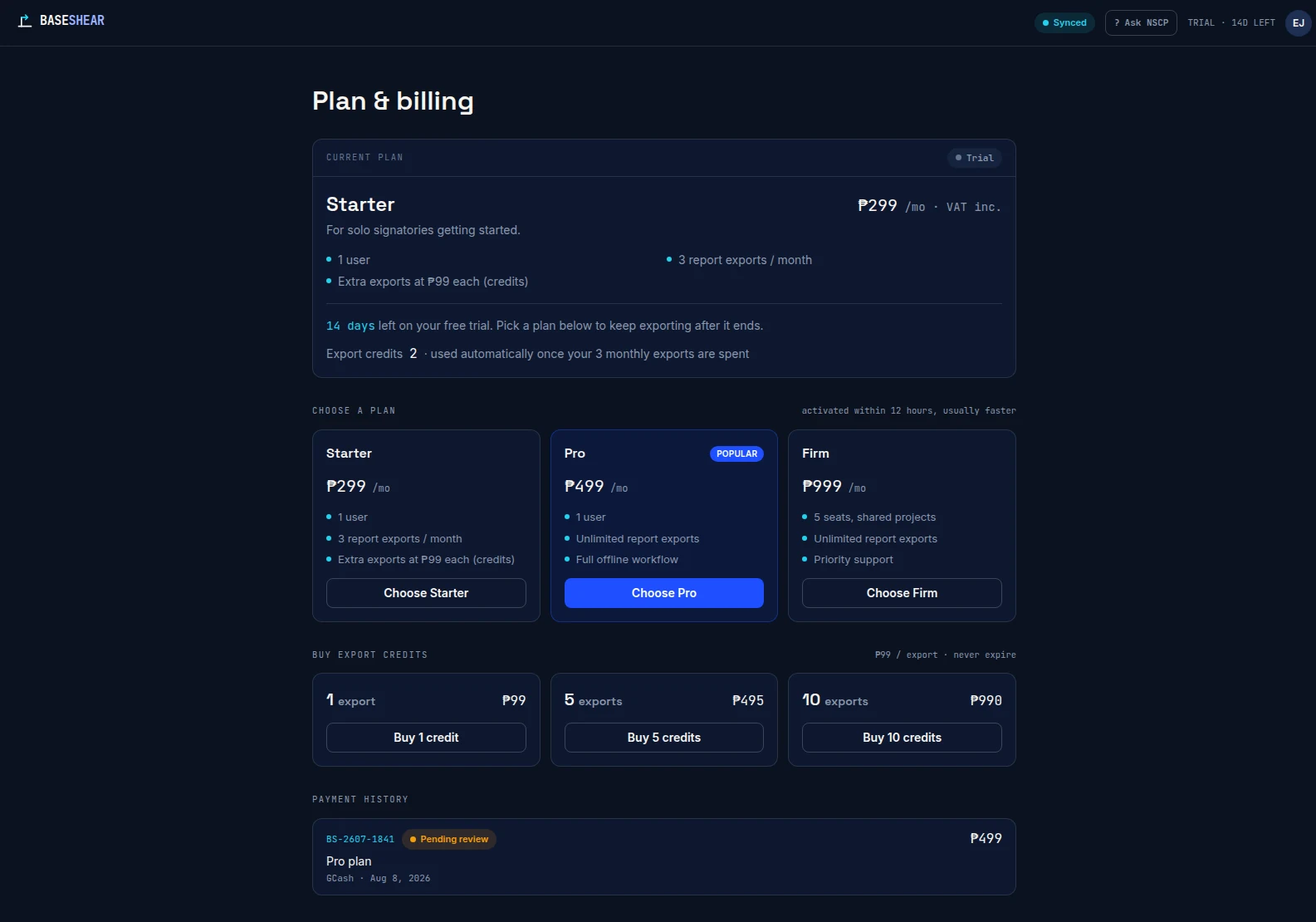
- Built a multi-tenant Supabase backend with row-level security, a tenant lifecycle (trial/active/expired/suspended/banned), and audit logging.
- Built a Mission Control admin console for payment verification and platform metrics.
- Built a PDF export service that renders permit-ready reports with title blocks and engineer credentials through Playwright and headless Chromium.
- Added LLM-assisted input sanity checks, design-note drafting, and NSCP Q&A on Groq with a fallback chain, and shipped an EN/Tagalog/Taglish UI while keeping reports in English per Philippine professional standards.
Root system
How it works
A pnpm and Turborepo monorepo of four apps and nine packages: a Next.js landing app (SSG, server-rendered i18n) alongside two Vite + React PWAs for the customer app and Mission Control. Supabase Postgres runs in ap-southeast-1 with RLS-enforced multi-tenancy and storage for uploads and receipts, with Edge Functions handling the LLM proxy and admin API. The calculation engine itself is pure, zero-dependency TypeScript running client-side, which is what makes offline use and instant preview possible; PDF generation runs as a Vercel container function driving headless Chromium. GitHub Actions runs lint, typecheck, Vitest, and Playwright, with Sentry and PostHog covering errors and funnels.
Harvest
Outcomes
- Production MVP deployed July 2026 — customer PWA, landing, Mission Control, PDF service, engine, RLS, and observability all shipped, with CI running lint, typecheck, Vitest, and Playwright end to end.
- A 355-case golden suite validates the engine's intermediate outputs against the reference sample report.
- Pre-launch soft access only — no users, no revenue yet.
- Deferred post-MVP: steel member design, STAAD .anl parsing, combined and mat footings, response-spectrum analysis, DOCX export, and NSCP 2024.
Herbarium
The work itself
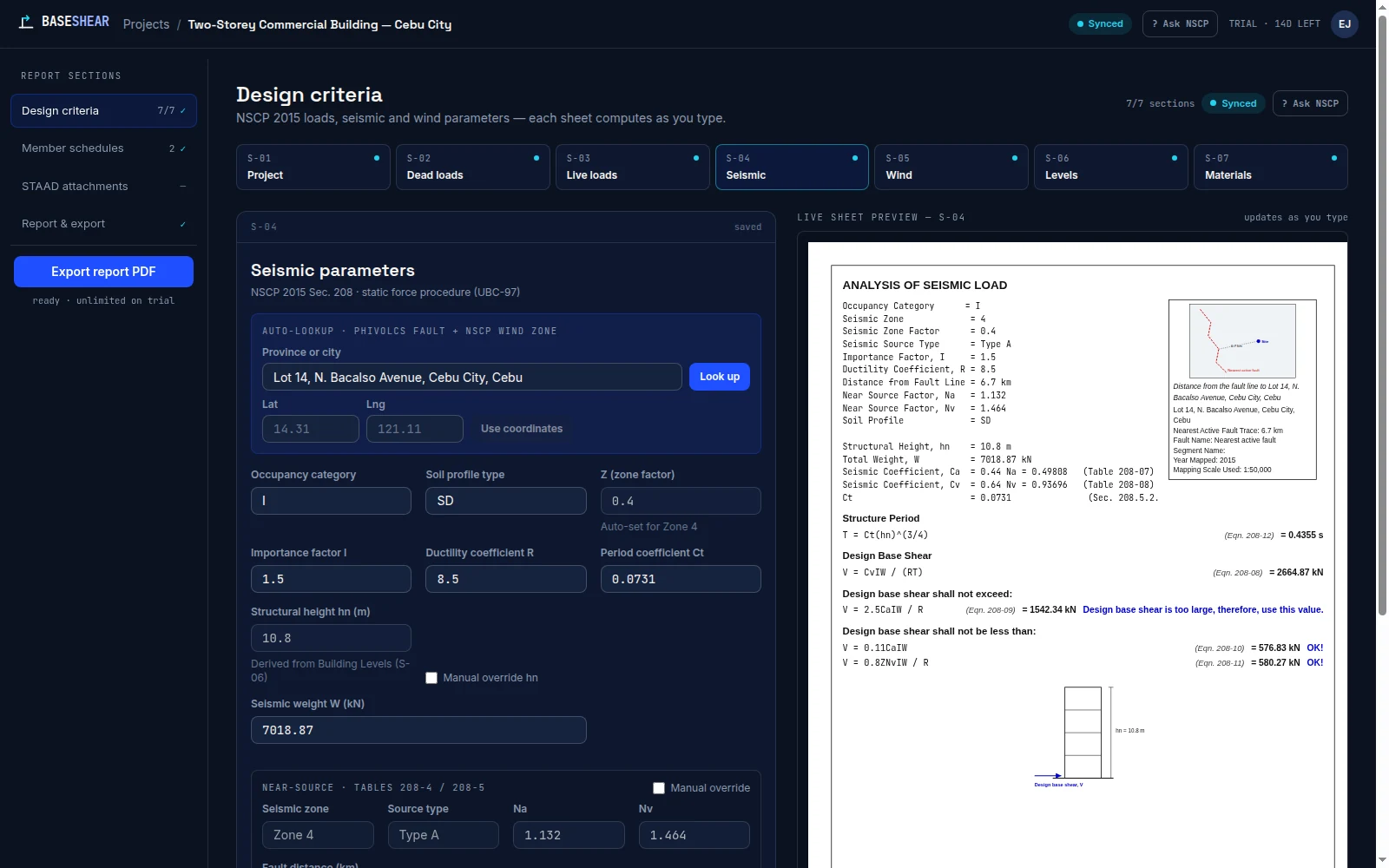
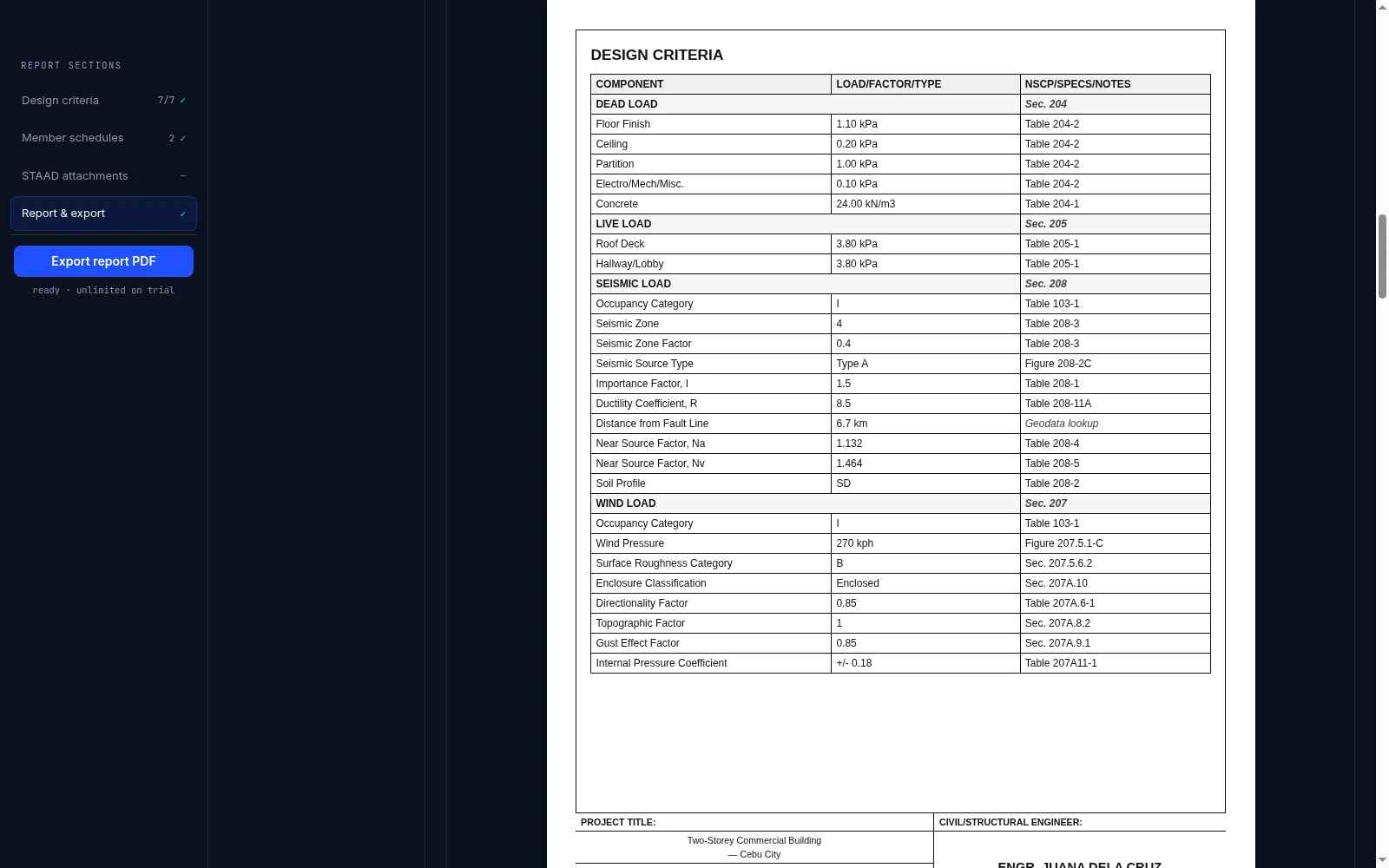
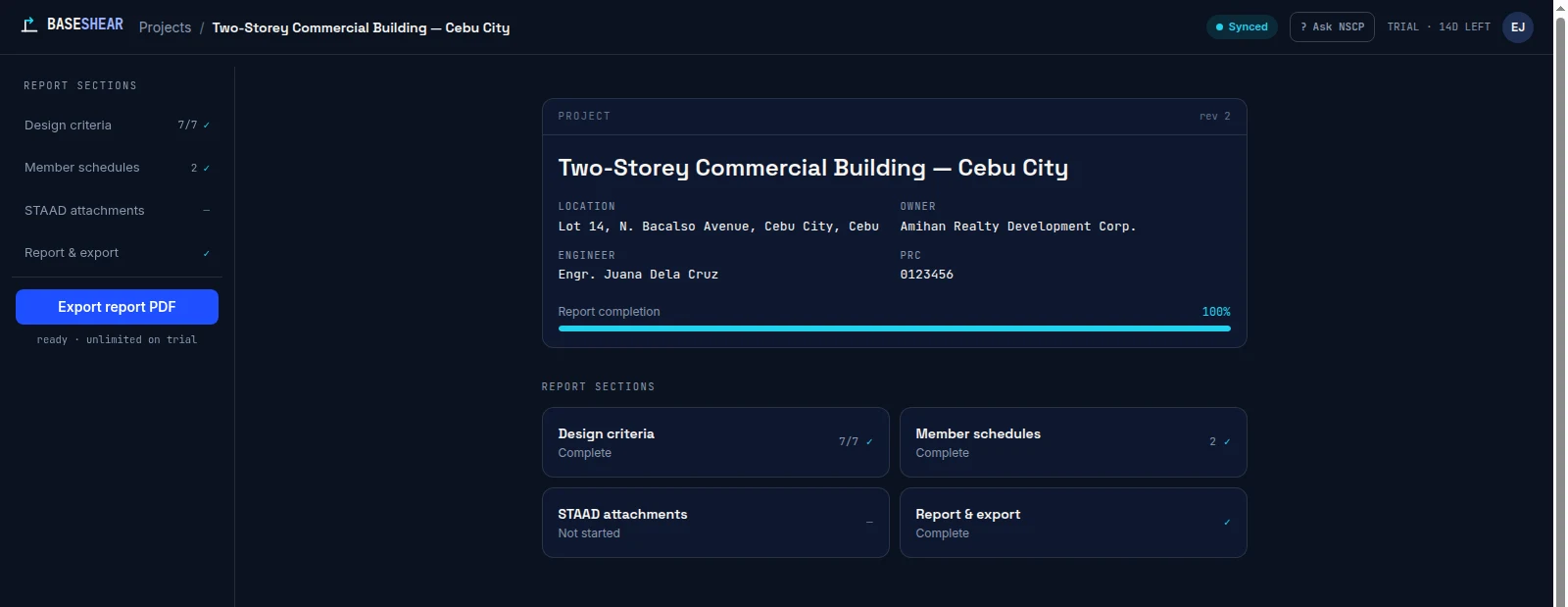
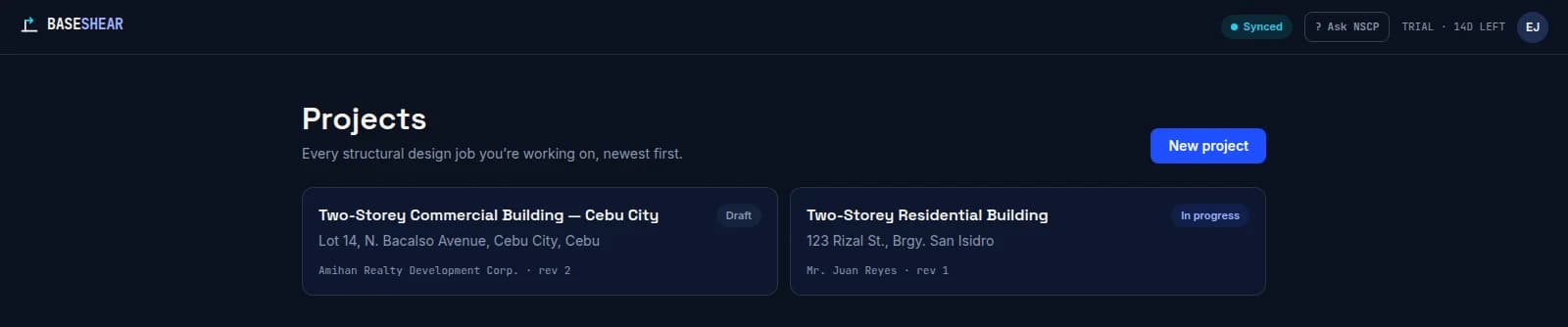
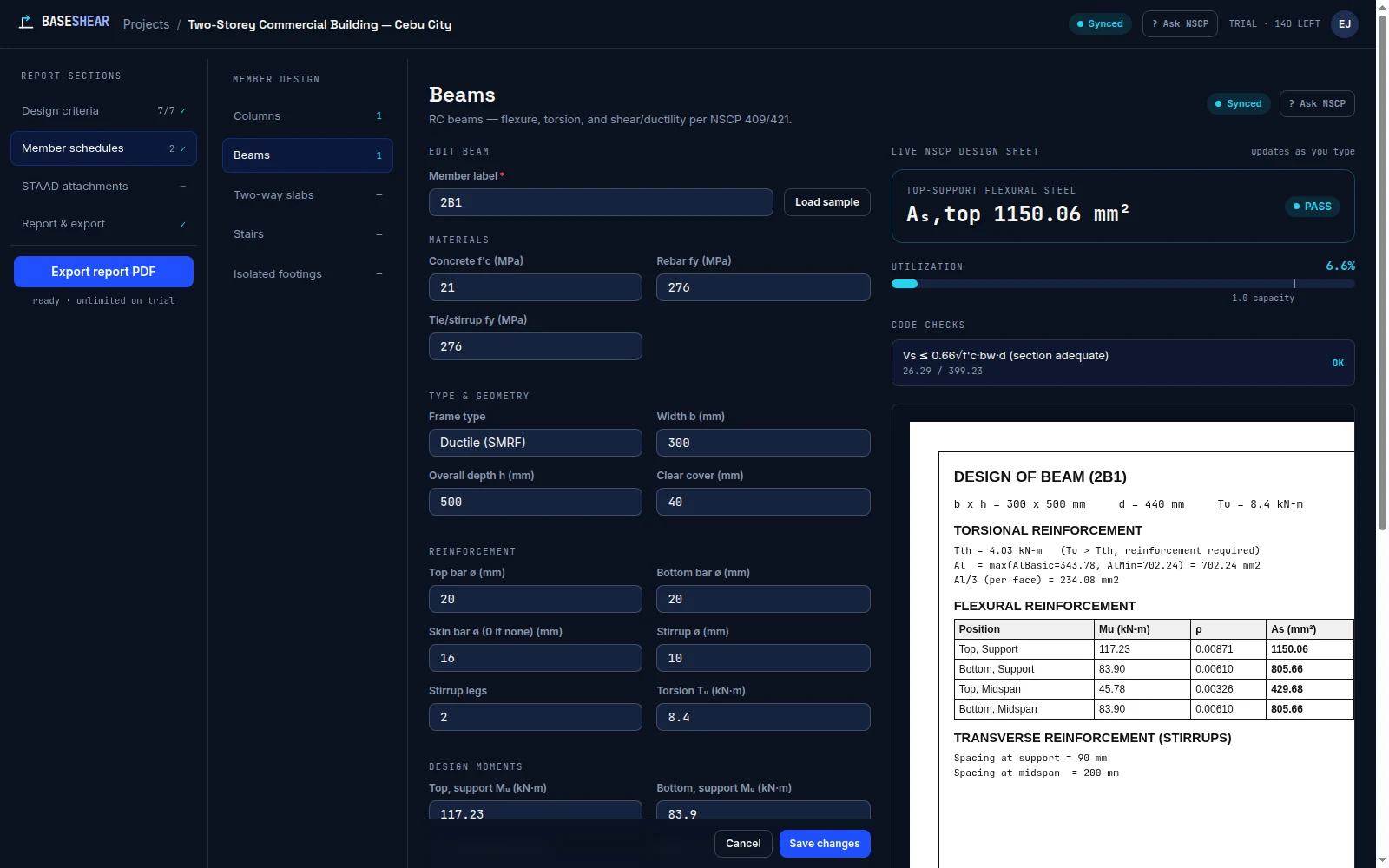
Golden-testing the calculation engine against a real reference report — rather than against unit assumptions — was what made the eight-module analysis engine trustworthy enough to generate a permit-format document. Keeping the engine as pure, dependency-free TypeScript on the client turned offline support from a stretch goal into a natural consequence of the architecture.