Acc. XXIV · Frons octoclada — ECS-driven roguelike brawler, cultivated 2026
Conquer Brawl — eight-class roguelike browser brawler
Systems R&D engineer · 2026 · Independent studio
An eight-class roguelike browser brawler with P2P multiplayer, built on a Miniplex ECS simulation backbone — a direct architectural contrast to Emberkeep's split store/runtime approach.
Frons octoclada — ECS-driven roguelike brawler, cultivated 2026
Field notes
The context
After Emberkeep's split store/runtime approach to simulation state, the studio wanted to test the alternative architecture — an entity-component-system as the simulation backbone — against a different genre: an eight-class roguelike brawler with P2P multiplayer.
Cultivation
What I built
- Built eight class kits on top of a Miniplex ECS driving simulation state.
- Implemented P2P multiplayer alongside Rapier physics for combat and movement.
- Built the audio and post-processing layers for combat feedback.
- Set up an automated Blender + GLTF asset-optimisation pipeline, verified with Vitest.
Root system
How it works
Simulation state runs through a Miniplex ECS rather than the split store/runtime pattern used in Emberkeep, with Rapier physics and React/Three.js rendering layered on top. Assets move through an automated Blender-to-GLTF optimisation pipeline. Built primarily with Claude Code, with Fable 5 brought in for part of the work.
Harvest
Outcomes
- Eight class kits and P2P multiplayer working on an ECS-driven simulation backbone.
- Validated ECS as a viable alternative to the split store/runtime pattern for a different genre of real-time browser game.
- The working repository is not currently available for inspection, so this entry is intentionally scoped tighter than the others in the catalogue.
Herbarium
The work itself
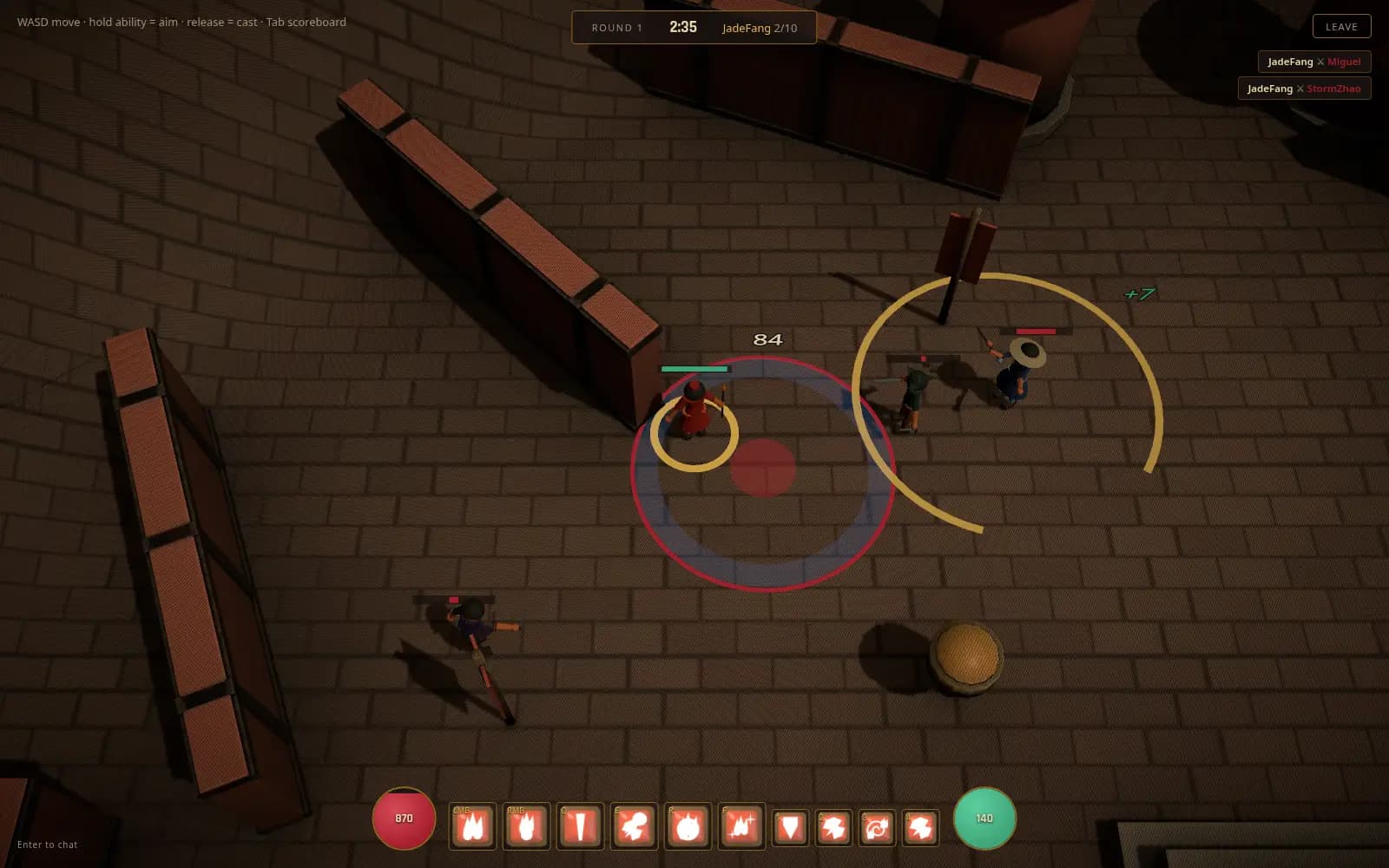
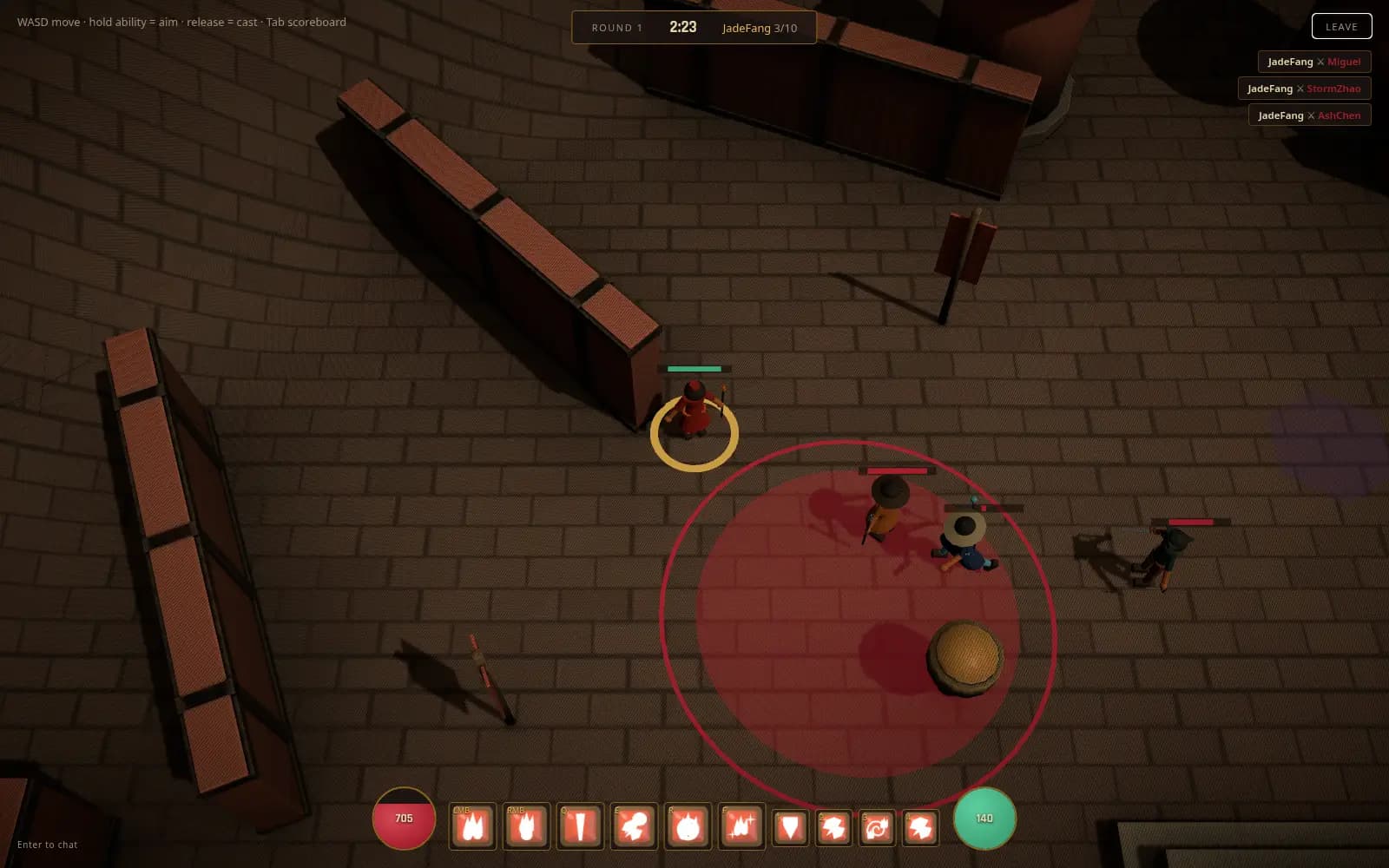
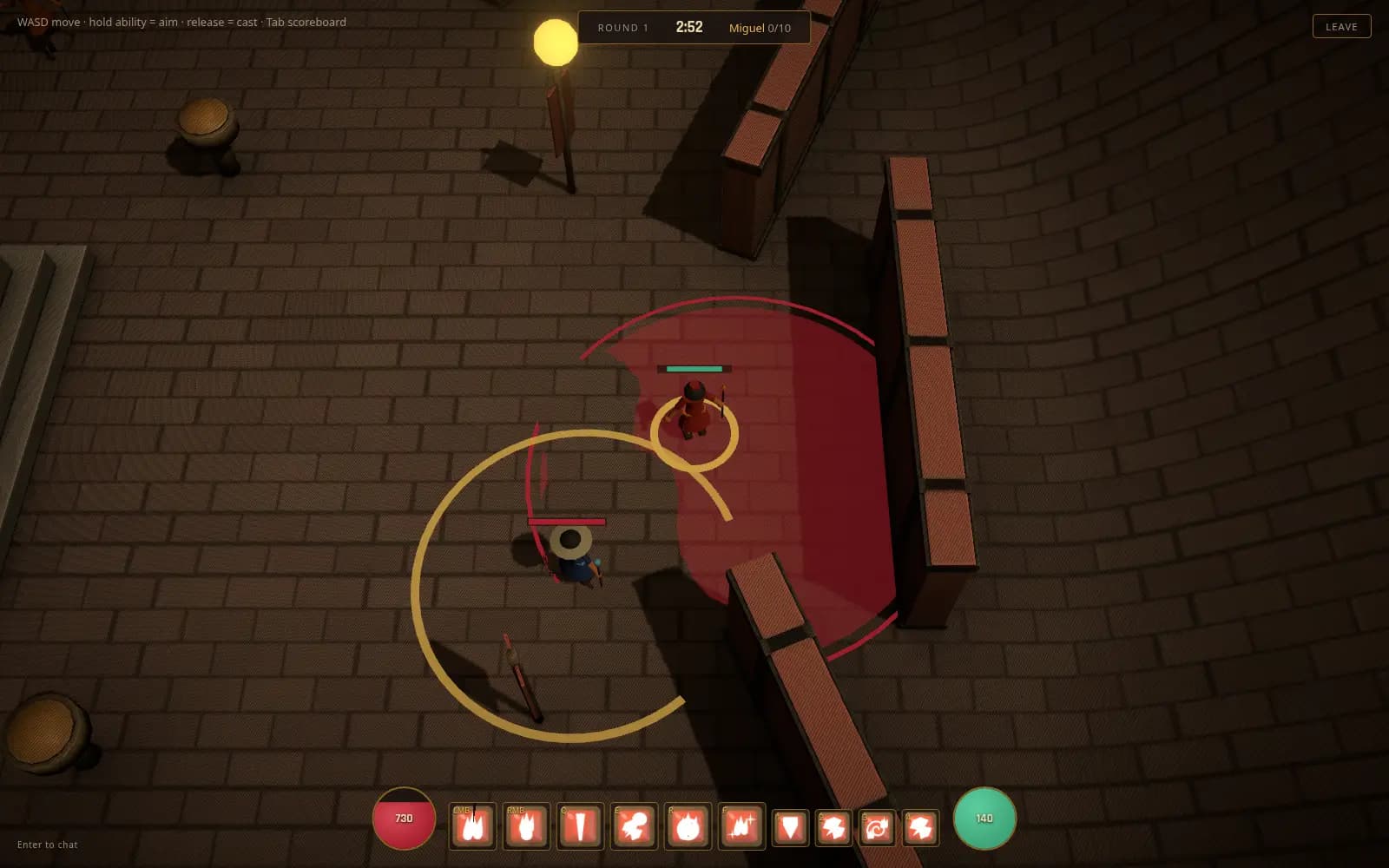
![Top-down 3D gameplay capture, 1600 by 1000, of a broad sand-coloured brick plaza at the start of a round, lit warmer and brighter than the other frames. The player's red-robed character stands at centre inside a gold selection ring with a full green health bar above them. Props sit around the plaza: a wooden market stall with a yellow thatched canopy at upper left, small wooden crates at upper left and mid-left, a round-topped wooden post to the right of the player, a tall thin wall slab running vertically down the right third of the frame casting a long shadow, and a red-tiled roof at lower left. Across the lower third of the screen sits the roguelike draft interface: a small gold letter-spaced heading reads "CHOOSE AN UPGRADE" above three dark rounded cards side by side. Card one is labelled "[1]", titled "Chi Flow", rarity "COMMON" in muted green, effect "-10% ability cooldowns". Card two is "[2] Keen Edge", "COMMON", "+10% ability damage". Card three is "[3] Iron Body", "COMMON", "+150 maximum health". HUD overlays: top-left control hint "WASD move · hold ability = aim · release = cast · Tab scoreboard"; a dark banner at top centre reading "ROUND 1", timer "3:00" and "Miguel 0/10"; an outlined "LEAVE" button at top right. Along the bottom, a red orb reads 950, the ten-slot ability bar of orange-red flame and claw icons is keyed LMB, RMB, Q, E, R, F and 1 through 4, and a green orb reads 140. Small text at bottom left reads "Enter to chat".](/_next/image?url=%2Fprojects%2Fconquer-brawl%2F04-roguelike-upgrade-draft.webp&w=3840&q=75)
Comparing an ECS-driven simulation against a split store/runtime approach across two different projects surfaces trade-offs — in state locality, testability, and per-frame cost — that neither architecture reveals on its own.