Acc. XXIII · Lignum arcanum — P2P voxel combat arena, cultivated 2026
Voxel Warlock Brawl Arena — P2P voxel combat arena with synthesised audio
Systems R&D engineer · 2026 · Independent studio
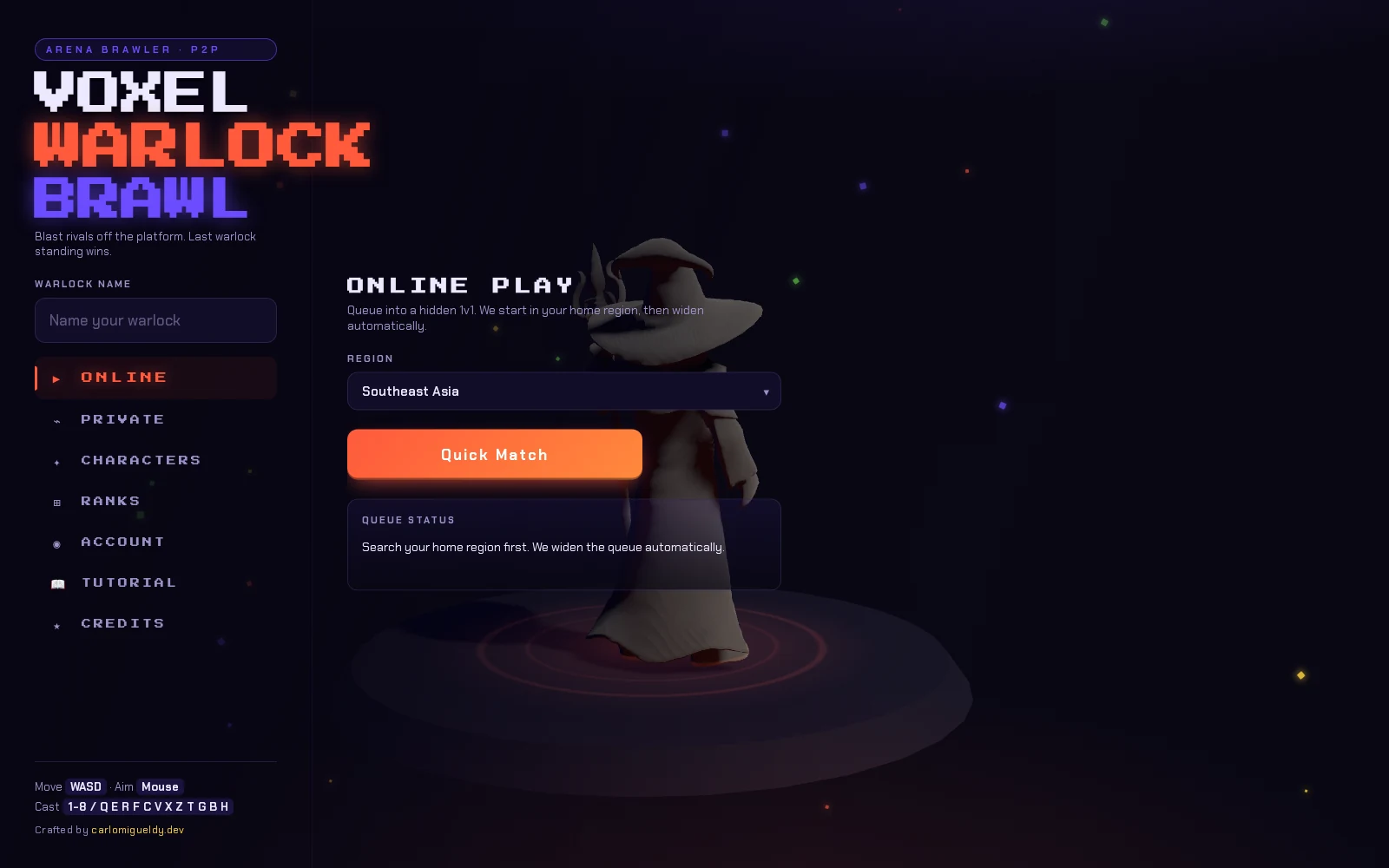
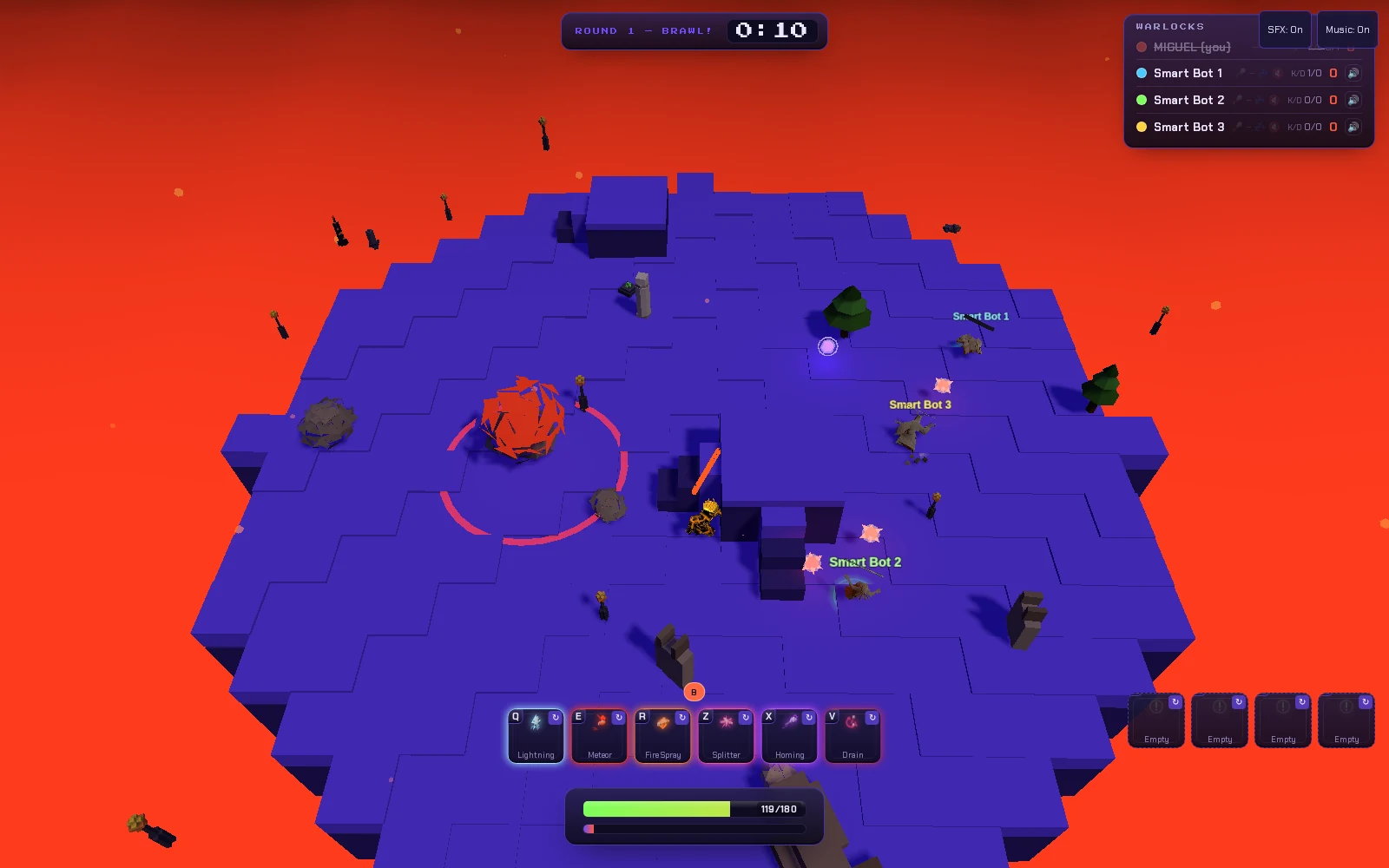
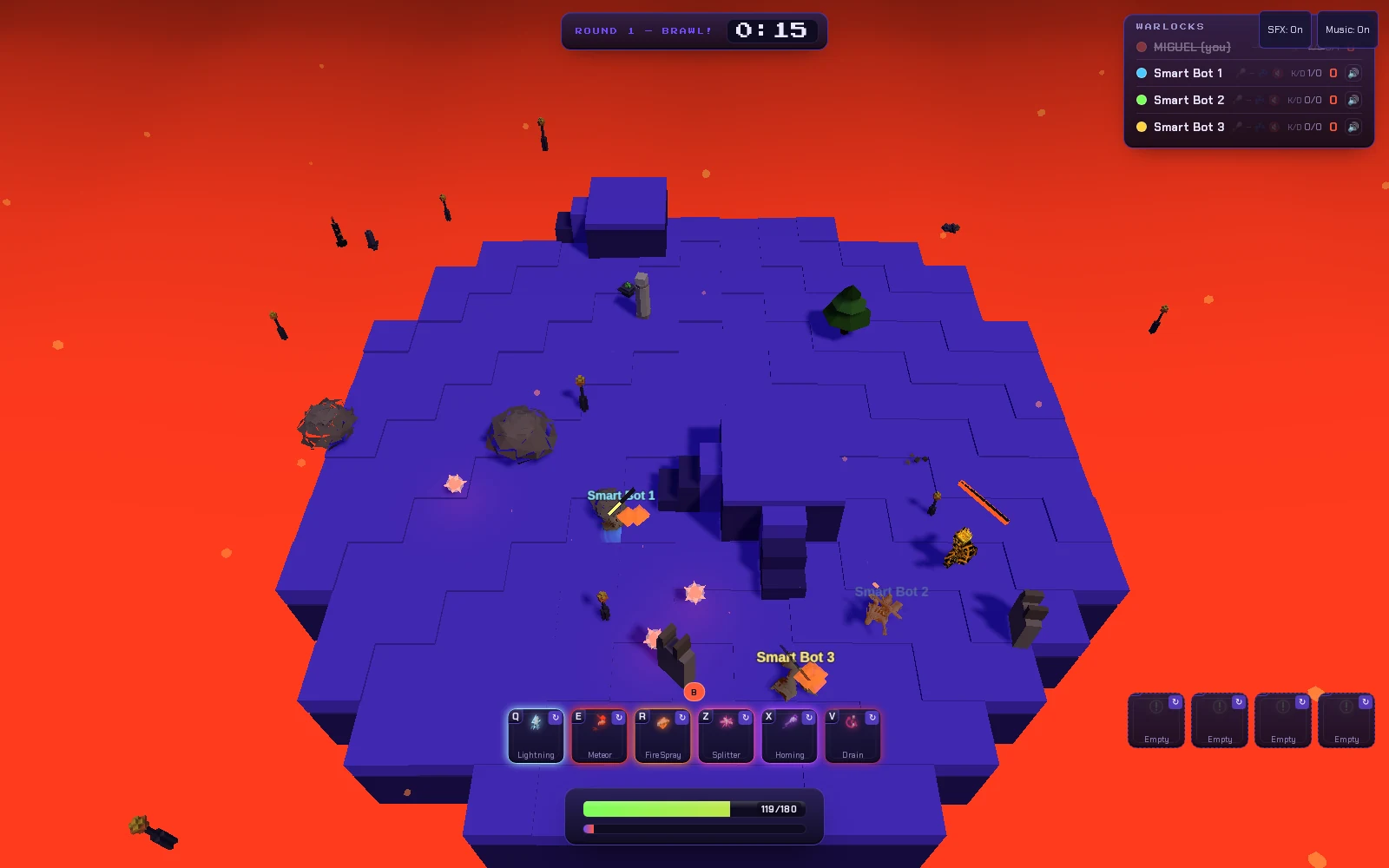
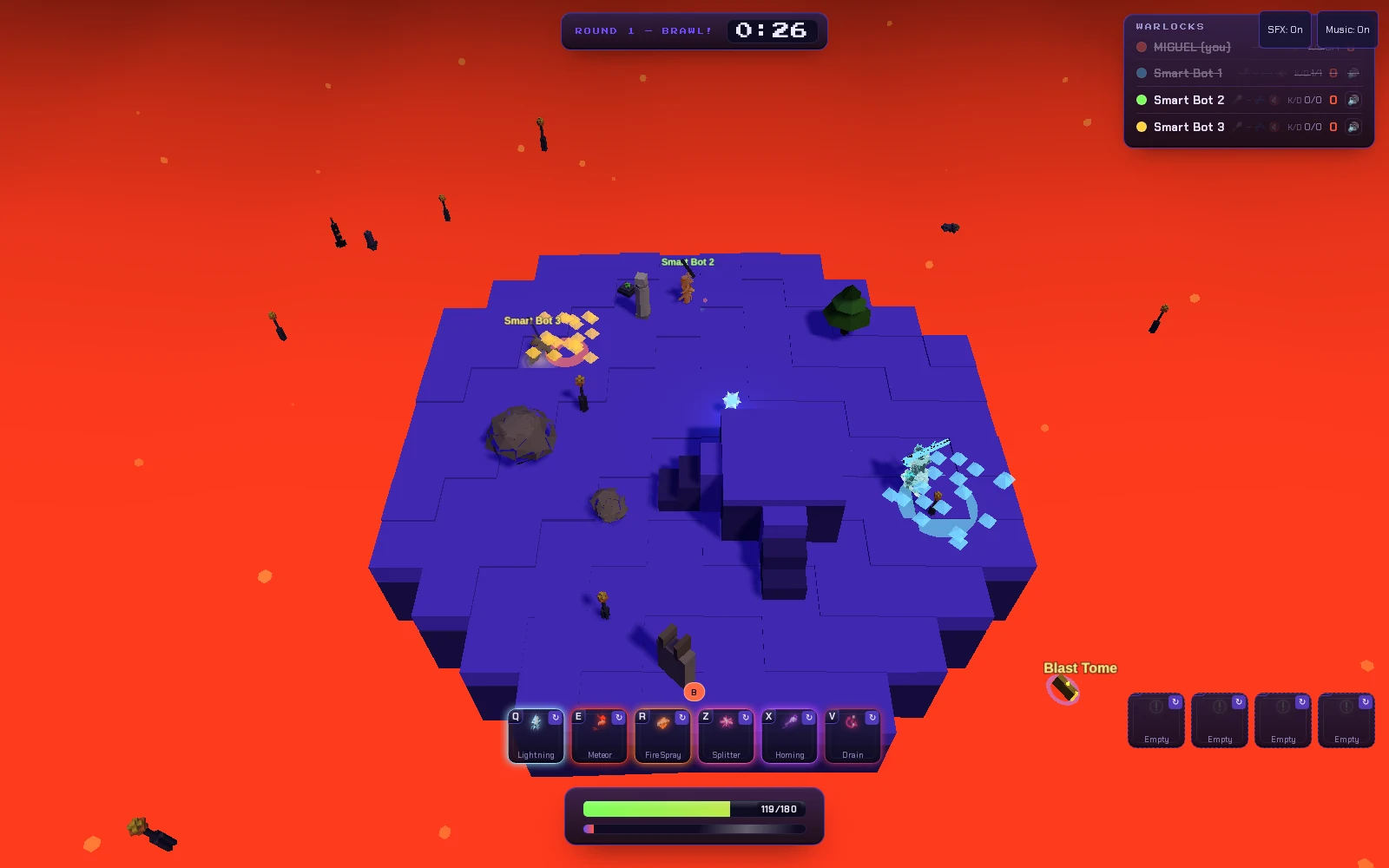
A Three.js voxel arena brawler with host-authoritative WebRTC multiplayer, twenty spells, and fully synthesised audio with no asset files — built through multi-agent orchestration with explicit model tiering.
Lignum arcanum — P2P voxel combat arena, cultivated 2026
Field notes
The context
The studio wanted a real-time multiplayer combat system that didn't depend on a game server — a P2P arena brawler forced hard decisions on simulation authority, network synchronisation, and procedural audio that a single-player prototype never surfaces.
Cultivation
What I built
- Built knockback-based combat with damage scaling and charge accumulation, and a shrinking arena with a lava elimination hazard.
- Implemented host-authoritative P2P multiplayer over WebRTC data channels via PeerJS, with room codes, invite links, and QR joins.
- Designed twenty spells with distinct cooldowns and effects, plus chain-lightning and particle effects with screen shake.
- Built a fully procedural audio layer through the Web Audio API with no asset files — every sound is synthesised at runtime.
- Separated the codebase into a pure simulation module independent of rendering, ability/warlock-state modules, a Three.js renderer with interpolation, a PeerJS/WebRTC networking module, and a Web Audio synthesis module — the split that makes the simulation testable without a browser.
- Shipped a service worker with offline support and a PWA manifest on browser-native ES modules with zero build step.
Root system
How it works
The simulation runs as a pure module decoupled from rendering, with a Three.js renderer layered on top for interpolated presentation. Networking runs host-authoritative over PeerJS/WebRTC data channels. Supabase Postgres backs region matchmaking and accounts, currently in progress. Hosting is static on Vercel with service-worker caching, and assets come out of a Blender Python pipeline. The project was initiated with Sakana AI Fugu Ultra, then maintained through multi-agent orchestration with explicit model-tier declarations — planning and review on the strongest tier, implementation on the middle tier, reconnaissance on the cheapest — plus an unattended issue-progression loop converting feature-gap analysis into a structured backlog.
Harvest
Outcomes
- A working P2P combat arena with twenty spells, host-authoritative netcode, and zero-asset procedural audio, verified with Vitest.
- Region matchmaking, leaderboards, and accounts remain in progress against the Supabase backend.
- The repository's own rules mandate model-tier declarations on agent calls and ban AI attribution in commits — an internal governance pattern proven out here.
- No players claimed — this is a technical prototype.
Herbarium
The work itself
Decoupling simulation from rendering is what makes P2P netcode testable at all; and model tiering across planning, implementation, and reconnaissance is a cost and quality lever that a single-model workflow doesn't have available.